
The Short Version
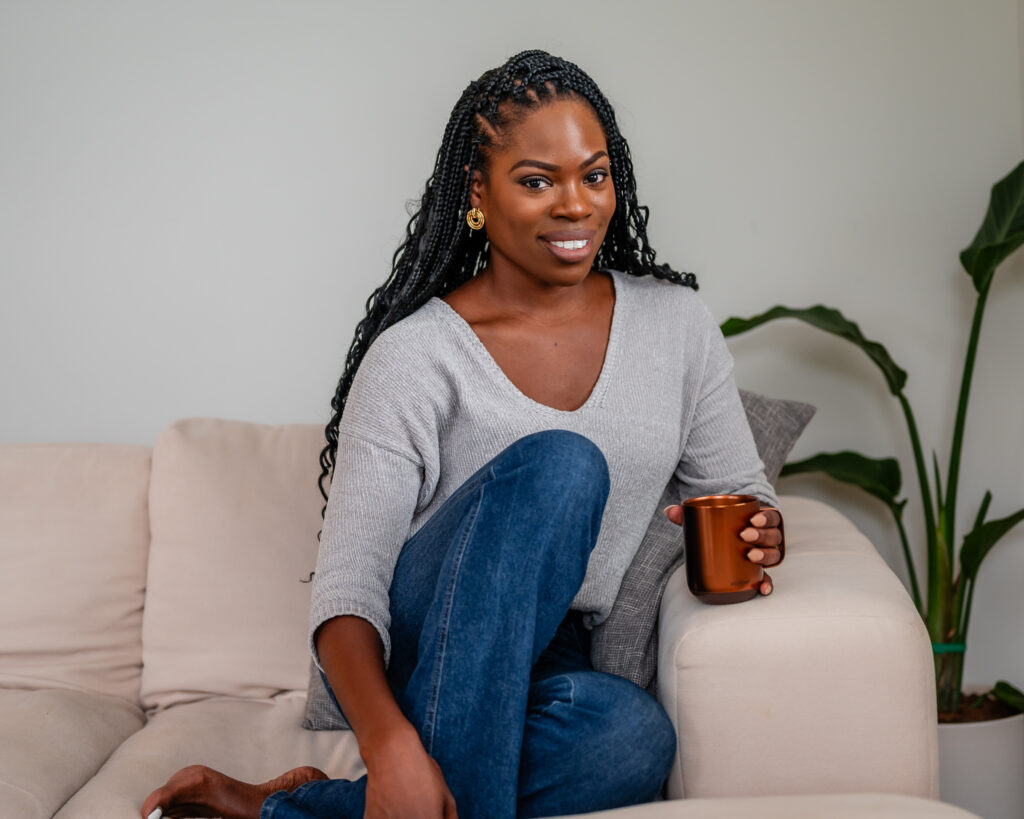
Hi, I'm Dr. Shanice Jones Cameron.
I’m Dr. Shanice Jones Cameron, a scholar of media, technology, and health communication. My research explores how health-centered digital networks and cultures shape Black women’s well-being, identity, and everyday lives. I focus on social and digital media and explore cultural narratives that influence how Black women care for ourselves and how these intersect with the internet.
The Longer Version
Communication scholar, podcaster, and time management enthusiast.
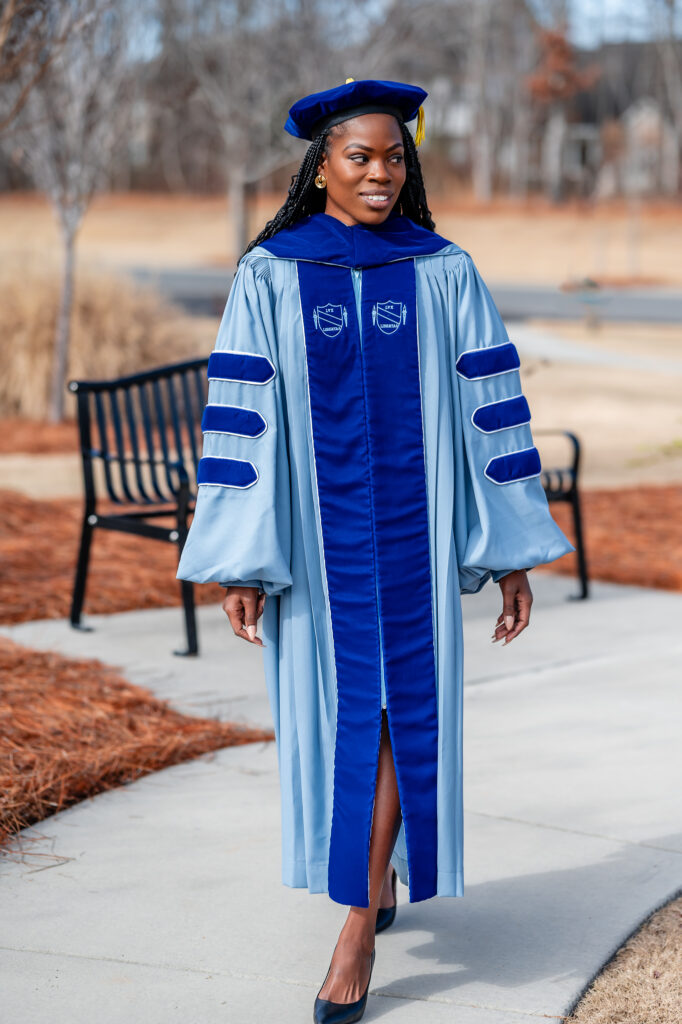
Dr. Shanice Jones Cameron (Ph.D., University of North Carolina at Chapel Hill) is an Assistant Professor in the Department of Communication at the University of North Carolina at Charlotte. She researches health and wellness discourses that are distributed through social media with a focus on Black women’s health and well-being digital networks and communities. Her current projects explore mental health and podcasting, Black women’s maternal health, and social media health misinformation and disinformation. Dr. Jones Cameron primarily uses qualitative methods, including interviews and participant observation.
She was awarded The Ray Camp Top Faculty Paper Award from the Carolina’s Communication Association for her paper, “Mapping the User Trajectory: Black Women’s Digital Well-Being Networks and Social Support Affordances” in November 2024. She also received a Top Paper Award from the African American Communication and Culture Division of the National Communication Association for her paper, “Black People Don’t Do That”: A Critical Qualitative Study of Discursive Barriers and Black Women’s Digital Well-Being Networks” in November 2023.
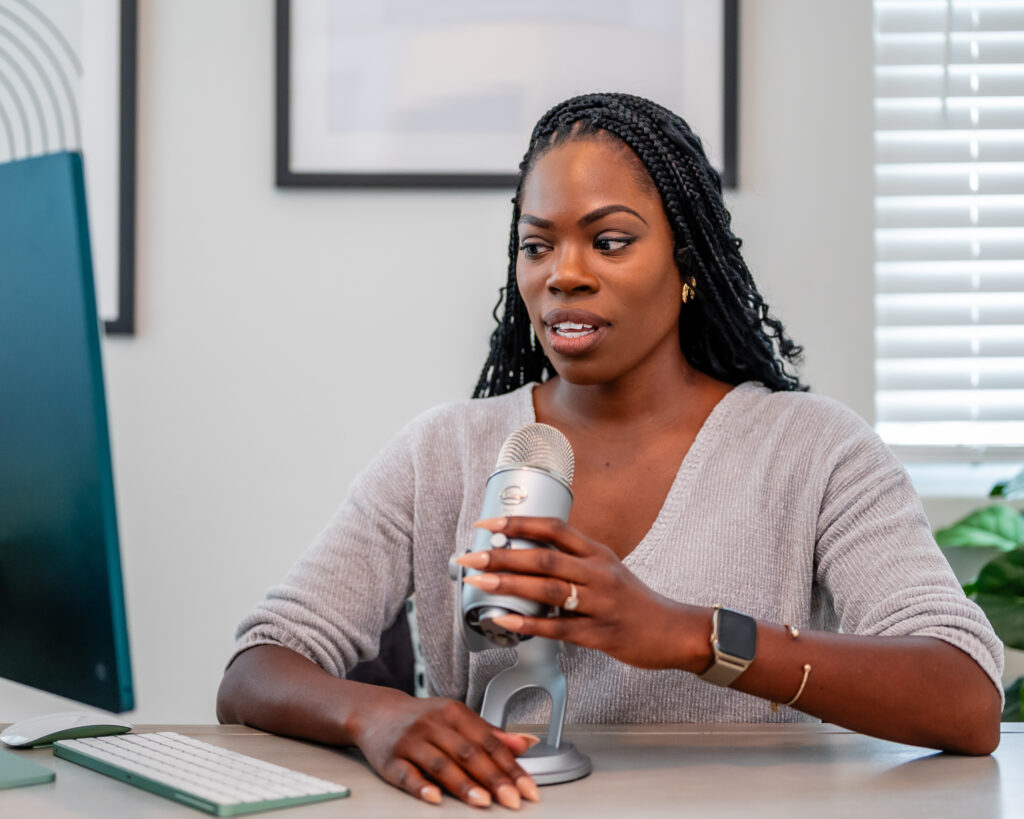
Outside of her scholarly work, Dr. Jones Cameron is the host of the Her Guided Evolution® podcast and founder of the holistic time management brand, Beyond Productivity®.
Scholarly Articles
Selected Publications
“We Out Here”: Black Women, Well-Being, and #blackgirlsrun on Instagram
In this digital ethnographic research, I explored how Black women in the United States utilize social media to create knowledges and cultivate communities that center their health and well-being. I argue that the participants regarded long-distance running as an anchor practice, which is an activity that simultaneously enriches multiple dimensions of a person’s well-being and precipitates other healthy behaviors.
“That Stuff Can Be Ugly:” Black Women in Sport, Stigma, and Public Mental Health Disclosures
I co-authored this paper with my colleague, Dr. Daniel Grano. For this research, we investigated Black women athletes’ long-form public mental health disclosures (LFPMHDs). We conducted a phenomenological thematic analysis and drew from Orbe’s co-cultural theory to illuminate the communicative practices and orientations that Black WNBA players rely on as co-cultural group members when discussing mental illness.
Be Still, Be Present: Black Girl Yoga and Digital Counter Spaces
The purpose of this study was to explore how a popular Instagram page, Black Girl Yoga, engages Black women with the spiritual practice. A combined Visual Discourse Analysis (VDA) and Critical Discourse Analysis (CDA) revealed that BGY engages Black women with yoga by: a) constructing a culture of inclusivity, b) affirming the individuality of Black women, c) intertextualizing African American cultural discourse and yogic principles, d) decentering Black women’s oppression, and e) creating continuity with physical yoga counter spaces.
Upcoming & Recent
Courses Taught
Digital Health Cultures
In this course, we interpret health broadly and explore how people use information and communication technologies to construct health co-cultures, monetize products, and efficiently share messages. Students explore various digital contexts where health messages are exchanged and consider the implications of using these technologies in this context.
Introduction to podcast theory and production
In this course, students explore the evolution of podcasting as a medium. We examine podcasting as an outgrowth of radio but also as a distinct form of digital communication. In addition to the theoretical aspect of the course, students learn to outline podcast episodes, practice the basics of editing audio, and produce their own mini podcast.
Contemporary Viewpoints in Communication theory
This graduate course helps students understand the ways in which Communication scholars think about, understand, explain, and create knowledge. The primary focus of this course is to help students grapple with contemporary viewpoints in communication theory, as well as to develop an understanding of the metatheoretical assumptions that underlie scholarly work.
Mini Apps & Digital Resources
Time management tools for people doing demanding work (including academic writing).
Beyond Productivity® is a brand of holistic time management and academic digital writing tools. I founded Beyond Productivity® with the assumption that many of us are writing and doing creative work while managing full personal lives that may include parenting and caregiving while also needing time for ourselves and our hobbies. I created this suite of mini apps to help you save time and make writing (and other challenging tasks) less intimidating by helping you cut through the mental noise and confusion, so you can complete your projects and free up more of your time.

The Podcast
Her Guided Evolution®
Dr. Jones Cameron is also the founder of Her Guided Evolution®, a digital platform, podcast, and YouTube channel that hosts conversations about self-development, spirituality, and holistic well-being.
Interviews & Writing
Featured Media
Friendship & Fitness: Black Women's Digital Wellbeing Networks
In this podcast episode with Dr. Dionne Stephens, Dr. Jones Cameron discusses her research about Black women’s digital health and well-being networks and the significance of these spaces for Black women’s holistic health.
Simone Biles did not need “redemption”
In this blog post, Dr. Jones Cameron and Dr. Daniel Grano examine the discourse surrounding Simone Biles’ mental health and withdrawal from the 2020 Olympics. This piece was written for Olympic and Paralympic Analysis blog.
READ THE POST →
Critical Disinformation Studies: A Syllabus
This syllabus was compiled alongside Dr. Alice Marwick, Dr. Rachel Kuo, and Dr. Moira Weigel. We argue that disinformation is a key way in which whiteness in the United States has been reinforced and reproduced.
Race, Social Media, and Yoga - Episode 16
In this podcast episode, with Dr. Oliver Rick, Dr. Jones Cameron discusses how mainstream yoga spaces often exclude Black women from the practice. I highlight how Black women yoga practitioners leverage social media to create the own yoga spaces in pursuit of holistic health.